Tili-instituuttisäätiö follow-up: Our cooperation improves year by year!
Tili-instituuttisäätiö works together with Taloushallintoliitto, the largest trainer and advocate in the Finnish financial administration sector. Tili-instituuttisäätiö…

Many organizations have invested heavily in AI over the past couple of years. Licenses for Microsoft Copilot, Google Gemini or Claude are bought for the whole staff, and the expectation is clear: work will get faster, better and more efficient. Then months pass, and the productivity jump never quite shows up in the figures.
The reason is rarely the tool itself. A license gives people access – it doesn’t give them skills. One employee uses AI to draft a few emails, another has automated half of their weekly reporting, and a third doesn’t dare to touch it at all. And the organization usually has no way of knowing which is which.
Using AI tools well is a skill like any other. It takes understanding how the models work, how to give them good instructions, how to check what they produce and how to use them safely with company data. Without that understanding, an expensive license easily ends up as a slightly smarter search engine.
That’s why investing in licenses alone is only half an investment. The other half is making sure people know how to use what they’ve been given – and being able to see that they do.
This is where AI exams come in. The biggest AI vendors have built certifications that measure exactly these skills:
An exam measures everyone’s skills in the same way, against a standard set by the vendor itself. For the organization, that means objective information on how capable people are with the tools. For the employee, it means proof of skills that is recognized across the industry – and a clear goal to learn towards.
At CertyHub, you can take AI exams from Microsoft, Google, Anthropic and other vendors at our test centers in Espoo and Gothenburg. We help you choose the right exams, sell exam vouchers for your whole team and organize private certification events, where your team takes their exams together at our test center.
Your AI licenses are already paid for. Make sure your people get the most out of them – and that you can see it. Contact us at info [at] certyhub [dot] com and let’s plan your team’s AI certification path together.
Tili-instituuttisäätiö works together with Taloushallintoliitto, the largest trainer and advocate in the Finnish financial administration sector. Tili-instituuttisäätiö…
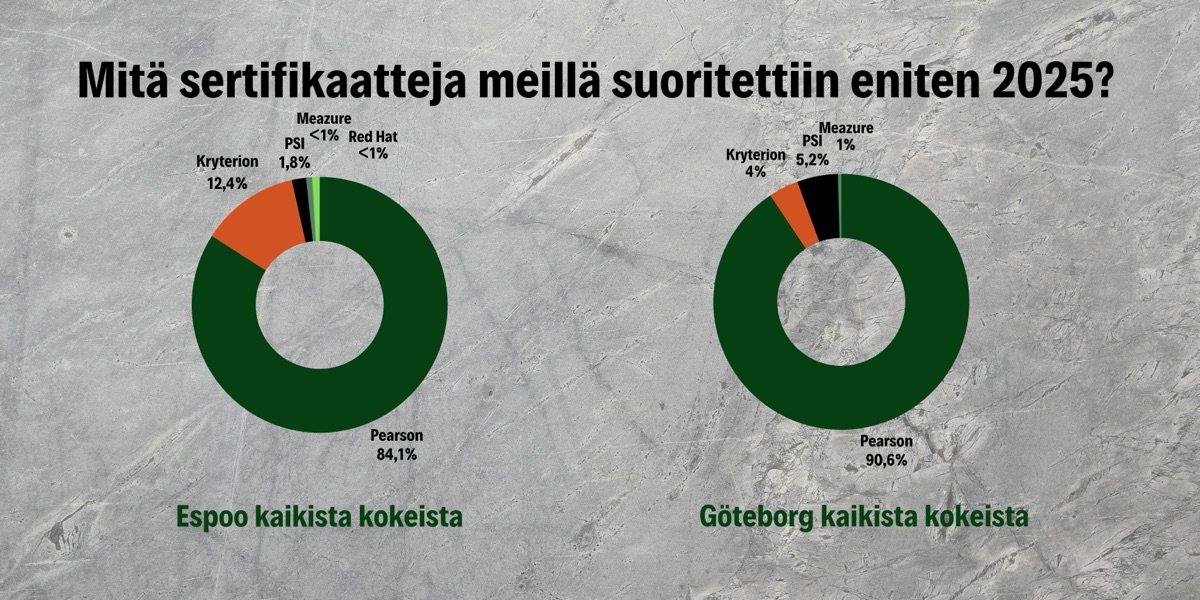
We once again gathered last year’s test data from both our test centers in Espoo and Gothenburg. In Espoo, Microsoft, Google Cloud and ISACA rose…
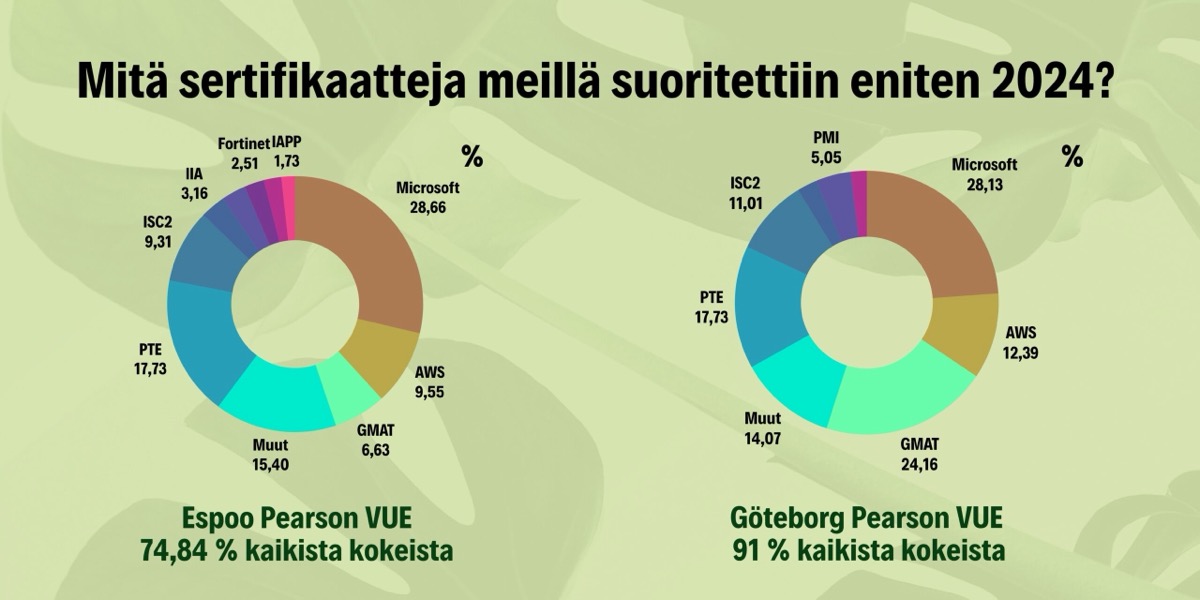
We once again gathered data on the tests taken last year! We collected figures from both our test centers in Espoo and Gothenburg, and it was interesting to see…